















Manual, Single and Double Electric Breast Pumps: Differences and When Each Makes Sense
What changes between a manual breast pump, a single electric one and a double electric one, and which criteria are worth checking before you narrow things down to specific products.
breastfeeding
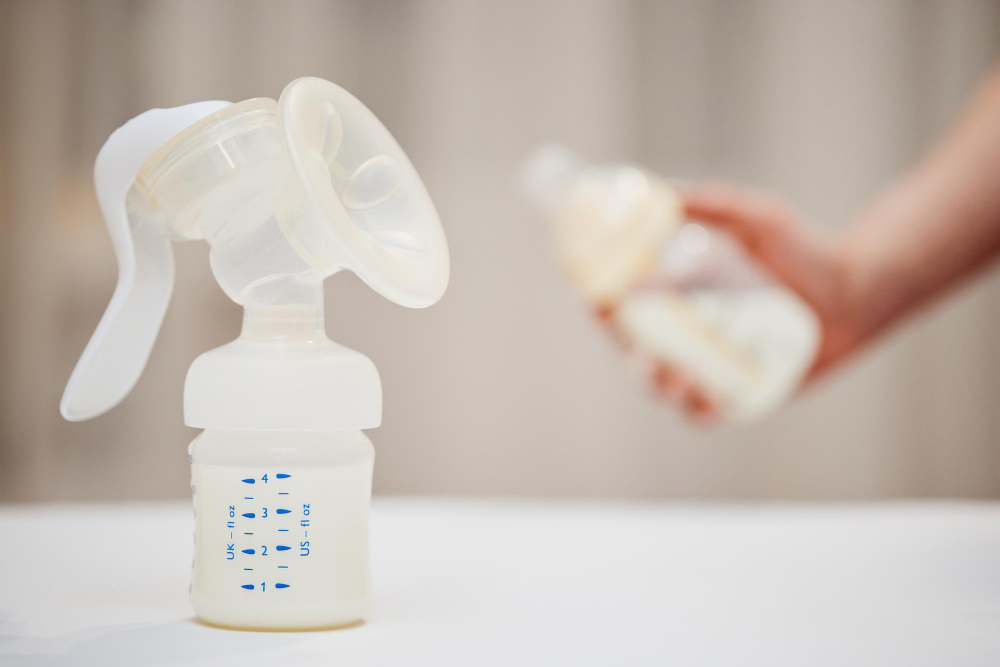
A breast pump is a system for expressing breast milk outside direct feeding. Not all of them do the same job or ask the same of you: it changes a lot depending on whether you only want something for the occasional session, whether you need to pump repeatedly during the week, or whether the real issue is having more freedom of movement while you keep up with your routine.
Buying one often goes wrong when you start with the brand or with the marketing promise. It helps to ask three questions first: how it expresses milk, how much manual work it requires and when it actually makes sense to use it. That gives you more clarity than starting with brands or broad promises.
The first half of this guide focuses on that: defining what a breast pump is, separating manual and electric models, and clarifying the practical difference between a single electric pump and a double electric pump. Then, instead of pretending to cover the whole market, the article narrows down to three concrete examples: a classic manual pump, a very simple silicone pump and a wearable electric model. The idea is not to close the market off, but to make it easier to see what changes from one profile to another.
What kinds of breast pump are there, and how do they differ?
The most useful distinction is not between brands, but between manual and electric pumps. Within the manual group, a silicone model that works through natural suction does not behave the same way as a classic hand-operated pump. Both do without a motor and batteries, but the level of control and the kind of movement involved are quite different.
Silicone manual
It is the simplest version: a single piece, no complex assembly, and use based on suction. Its appeal is extreme simplicity, not trying to replicate the way an electric pump works.
Classic manual
It keeps the portable, battery-free nature, but adds an active, repeated squeezing motion on the handle. In return, it usually gives more control over the manual pumping rhythm and tends to work better when you want something compact for occasional pumping sessions.
Single electric pump
This is the version that adds a motor without turning the whole system into a larger routine than you need. It often makes sense as a middle ground between manual and double electric. It reduces manual effort and automates part of the process, but it is not necessarily about cutting every possible minute from each session or making pumping both breasts at once the main priority.
Double electric pump
Here the question is no longer just whether the device has a motor, but whether the frequency and time spent pumping justify a more demanding system. A double pump makes sense when expressing both breasts at once or saving minutes per session genuinely changes your routine. In return, it usually means more setup, more parts and a different relationship with cleaning and assembly.
Wearable and hands-free
Wearables belong to the electric family, but they are not just a classic electric pump in a different shell. What they put front and centre is mobility and freedom while pumping, which is why it is worth reading them as a different way of using an electric pump.
That is why it helps to separate type of system from specific model: first you decide which profile makes sense for your routine, and then you look at which device represents that profile best.
What to look at before choosing
The choice mainly shifts around four practical variables. None of them depends on an abstract promise; all of them affect real use.
- Frequency: occasional pumping does not ask the same of you as a routine repeated several times a week.
- Manual involvement: some systems keep assembly and movement to a minimum; others require continuous manual action.
- Mobility: if you want to pump while doing other things, a wearable changes the experience quite a bit compared with a manual pump.
- Cleaning and complexity: the more parts and the more system there is, the more it matters to ask whether that extra setup really pays off in your routine.
From here, you do not need to think in abstract categories anymore. Looking at three examples that represent different kinds of use is enough: a classic manual pump, a silicone pump and a wearable electric model. That already makes it quite clear where the decision changes without turning the article into something too commercial.
Even so, it is still useful to keep the minimum distinction between single electric and double electric clear: a single electric pump usually works as a middle step from manual pumping, while a double electric comes into play when frequency, time per session or the need to pump both breasts at once genuinely matter in your routine. Keeping that axis in mind makes the examples easier to read without turning this second half into a fixed comparison.
With that frame in place, what comes next are three options we like because they illustrate clearly different profiles. They are here to bring the theory down to real use, not to make the decision for you.
Medela Harmony as a classic manual pump
Key takeaways
Medela Harmony is a good illustration of the classic manual pump: a compact device, with no batteries, designed for anyone who does not need to turn every session into a major operation. It does not try to pass as an electric model; it is about offering a recognisable manual pumping experience that is easy to take with you.
Official documentation links it to PersonalFit Flex and to a manual use of 2-Phase Expression, that is, an alternation between short stimulation movements and longer expressing movements. That technical base helps place it clearly inside the classic manual category without asking it to do more than it promises.
Fits if
- You want a compact manual pump for occasional use, travel without depending on batteries, or to keep an active manual rhythm
- You mainly need a clear manual reference before stepping up to an electric pump
Watch out for
- It is not hands-free and it will not be the most comfortable answer for a very repeated routine, because manual effort weighs more there
As a reference point for a clearly defined classic manual pump, Harmony fits best with occasional pumping, travel and routines where a compact manual model solves the job better than a motorised device. It does not need to do more than that to earn its place here.

Haakaa 100 ml
Key takeaways
Within the selected group, Haakaa Silicone Breast Pump 100ml does not work like a scaled-down classic manual pump, but as another subcategory: a single silicone piece, with no batteries and no complex assembly. That simplicity is precisely the point, because it is not trying to cover every scenario, but to handle a light-use case with as little kit as possible.
It also makes it very clear that manual does not mean one single thing. There is no handle and no motor here: there is natural suction, portability and a very quiet format. That is why it works better read as its own subcategory within manual pumps.
Fits if
- You prioritise the smallest possible format, a single piece and very light use
- You want something very easy to store, clean and use for light pumping moments
Watch out for
- It does not give you the adjustability, power or feel of a motorised system
Its value lies in radical simplicity. If that is exactly what you want, it makes perfect sense. If you expect something close to an electric pump, you are really looking at the wrong category.
When a wearable makes sense: Momcozy M6
Key takeaways
Momcozy M6 is the piece that opens up the other end of the article: a portable, hands-free wearable electric pump. Official sources place it as a model designed for pumping at different moments of the day without tying you to a manual format.
That does not automatically make it the universal answer, but it does mark a real difference in the main question behind this post: how much mobility matters in your routine. Compared with the two selected manual pumps, the M6 opens up a more complex category that is much more focused on freeing your hands than on reducing the system to the bare minimum. Read that way, it helps compare mobility without turning it into the universal answer.
Fits if
- Your routine improves a lot when you can move around while pumping
- You prioritise a portable wearable for moments when staying still makes the routine harder
Watch out for
- Here it works as an example of a wearable, not as a direct substitute for every external electric pump
The M6 mainly helps show that a hands-free premium electric pump is a different conversation from the occasional manual pump. If that matters a lot in your day-to-day, here you have a clear example; if what you are after is a classic external electric pump or a traditional double pump, this text is not trying to exhaust that territory.
Common mistakes when buying a breast pump
Most mistakes look similar: a category gets bought on impulse, and only afterwards does it become clear that the real use case was different.
- Treating manual pumps as one single category and overlooking that silicone and handle-operated models solve different needs.
- Buying a wearable expecting it to stand in for the whole segment of external electric pumps on its own.
- Deciding from marketing labels before thinking about frequency, mobility and cleaning complexity.
- Forcing a price comparison when the reviewed sources do not offer a visible, consistent basis for one.
Brief summary
- If you want the simplest possible format, the silicone manual pump stands out for simplicity, not for behaving like an electric model.
- If you want a compact, more recognisable manual pump for occasional expression, the classic manual pump is still the easiest reference point to read.
- If the priority is greater mobility and hands-free use, a premium wearable electric pump opens up another category, but it does not replace every external electric pump on its own.
The sensible decision does not come from asking which one is best, but which kind of breast pump fits your real routine. Once that is clear, the catalogue becomes much less confusing.

Written by
Marta RuizMaternity and parenting specialist
Creates practical content about pregnancy, postpartum and early months.
You may also like
More helpful reads for common questions at this stage.

Apr 01, 2026
Duplicate gifts on the baby registry: a simple system to avoid them
What to do so you do not end up receiving the same gift twice: a simple way to organize the registry, clarify statuses, and handle purchases made outside the list without chasing the whole family.

Mar 02, 2026
Baby Registry in One Hour: What to Add First and What to Remove Without Worry
A quick way to build a useful registry by priority, without adding gifts that later get in the way or leaving out what is worth planning for.

Apr 14, 2026
First 7 Days at Home with Your Baby: What to Prepare Before Leaving the Hospital
Have ready what you really use after coming home from the hospital: sleep, diaper changes, feeds, clothes, and essentials without filling the house with extras.

Mar 25, 2026
Hospital bag for labor: what to bring, what to ask, and what to leave out
Pack your hospital bag without overloading it, separating essentials from what depends on the hospital and what only adds comfort.