















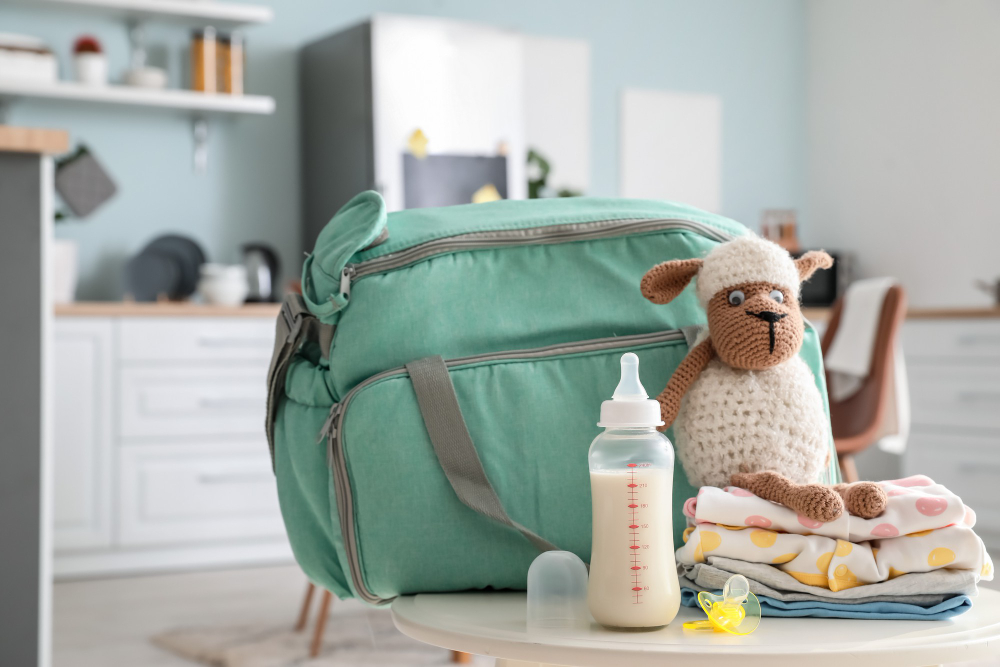
Coming home from the hospital with your baby often brings a strange feeling: on one hand it seems like everything is already done, and on the other it feels like you're missing everything.
In those first days, you do not need a perfect home or every accessory on the market. You need to have sorted out a few things you will actually use: where the baby sleeps, where you change them, what clothes you have within reach, and how to make feeds and diaper changes easier.
If you manage that before you arrive, the first week feels much less mentally noisy. Everything else can find its place later.
What is worth having ready before coming home from the hospital
Before the baby arrives, you do not need to set up a catalog-perfect home. But it is worth getting four simple basics ready.
If you also want to separate clearly what you need for birth from what is worth having ready at home, this hospital bag checklist can help.
- A place where the baby will sleep during those first months in your room, with the crib, bassinet, or carrycot already set up.
- A comfortable spot for diaper changes, with the basics always within reach.
- Clothes that are easy to put on, wash, and grab again without too much searching.
- The car seat already installed if you are going to be traveling by car from day one.
Always follow the safe sleep guidance given to you by your midwife, pediatrician, or hospital.
With that sorted, coming home stops feeling like an endless list and starts to feel more like a new routine that is still just getting started.
What you will actually use in the first 48 hours
The first two days usually revolve around the same things: sleeping in short stretches, changing diapers, feeding the baby, and adjusting to the new rhythm. That is why it helps if the important things are visible instead of stored in three different places.
| Area | Worth keeping within reach | Can wait |
|---|---|---|
| Sleep | Crib or bassinet ready, sheets and light layers depending on the temperature | Making the room look perfect or fully decorated |
| Changing | Diapers, water and cotton pads or gentle wipes, a change of clothes, and a towel or changing mat | Organizers, baskets, and storage accessories |
| Feeds | A comfortable corner, muslins or cloths, and water for the person feeding the baby | Buying extra gadgets before you know your routine |
| Outings and checkups | Car seat installed and important documents easy to find | The final stroller bag |
What is worth duplicating in a small way and what does not need repeating
A very common question in those days is whether it is worth spreading things all over the house. The short answer is that it only makes sense to duplicate, in a small way, whatever saves you from getting up half asleep or hunting for a spare outfit with the baby in your arms.
Only duplicate what saves you extra trips
- Keep a small night reserve near where the baby sleeps: a couple of diapers, a spare outfit, and a muslin.
- In the feeding area, prioritize comfort: water, cloths or muslins, and whatever you usually use at that time, without setting up a full second changing station.
- Clothes can all stay in one place if they are organized by real use: bodysuits, pajamas, and quick changes at the front; everything else can wait.
- You do not need to duplicate accessories, baskets, or storage solutions in every room during this first week.
The key is not to duplicate everything, but to reduce decisions when you are tired. If each area solves one clear need, the house works better without filling up with things.
What can wait without any problem
Many purchases happen too early out of fear of not having enough. In reality, there are quite a few things you can decide better after a few days of getting to know your routine.
- Decorating the whole baby's room.
- Buying lots of clothes in a single size.
- Duplicating accessories in every room just in case.
- Trying to find the perfect solution already for every cry, every nap, or every feed.
- Making big purchases when you still do not know whether they will fit your day-to-day life.
The most useful idea for that first week
If you keep one idea, let it be this: the first 7 days at home are not about having everything bought, but about having within reach what you will use several times a day.
Before leaving the hospital, have just four pieces sorted out: sleep, diaper changes, feeds, and the first outing or checkup. If today you can only get one thing sorted, start by putting together in each area the essentials you do not want to go looking for half asleep. If that is ready, the week will not be perfect, but it will be much less improvised.

Written by
Marta RuizMaternity and parenting specialist
Creates practical content about pregnancy, postpartum and early months.
You may also like
More helpful reads for common questions at this stage.
View more
Mar 02, 2026
Baby Registry in One Hour: What to Add First and What to Remove Without Worry
A quick way to build a useful registry by priority, without adding gifts that later get in the way or leaving out what is worth planning for.

Jul 07, 2026
Sleeping like a baby doesn't mean sleeping through the night
Normal wakings, safe sleep, and false expectations: what to know before assuming something is wrong.

Aug 14, 2026
Sensory stimulation and psychomotor development in babies: an age-by-age guide
What sensory stimulation and psychomotor development mean, how they support your baby’s development and which simple activities you can offer from 0 to 12 months without rushing them.

Jun 01, 2026
Multi-store baby registry: what to check before choosing an app
A multi-store baby registry is more than collecting links from different shops. Here are the criteria to review before choosing an app so family and friends can understand the list without extra back-and-forth.