















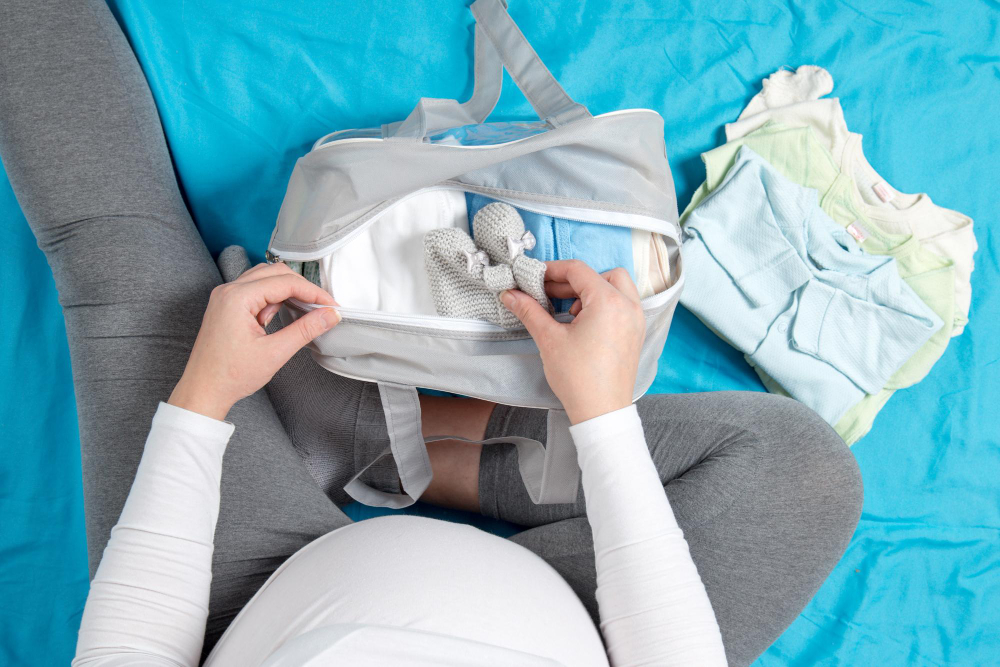
Hospital bag checklists are everywhere. And most of them are not wrong: they are written without knowing what your hospital provides or what they will ask you to bring.
Some hospitals provide diapers, postpartum pads, and basic baby clothes. Others do not. Some allow your partner to stay overnight. Others have different rules. Bringing too much has a cost; forgetting something important does too.
The most useful thing before making your list is knowing what to expect. One question to your midwife or the admissions office can solve more than any generic checklist.
Before you pack your bag, ask your hospital these questions
The documents they require, the supplies they provide, and the rules for your partner vary quite a bit from one hospital to another. These are the questions worth answering before you start putting things in your bag:
- What documents should I bring
- Do you provide postpartum pads
- Do you provide diapers or basic baby products
- Will the baby wear their own clothes or hospital clothes during the stay
- Can my partner stay
- Do you allow food or snacks
- What do you recommend for the baby's trip home
Once you have those answers, the bag comes together much more easily and without unnecessary extras.
One bag or several?
You do not need a complicated system. What usually works well is splitting the contents into two parts, even if they stay inside the same bag: what you need to have at hand as soon as you arrive and what is for the stay itself.
Quick access: documents, phone, charger, something to drink, and the essentials for the first few hours.
Stay: a change of clothes, toiletries, and the baby's things. Once it is separated this way, everything is much easier to find later.
If your partner is staying, apply the same logic on a smaller scale: their charger, a comfortable change of clothes, basic toiletries, and something easy to eat or drink are enough to avoid constant trips back and forth or unpacking the whole bag.
The core of the bag and what is worth confirming
To avoid ending up with several almost identical checklists, it is more useful to start from one practical base. First pack what helps you manage arrival and a short stay; within that same review, mark what depends on what your hospital provides.
Start here
- Documents within reach: ID or passport, health insurance card, and pregnancy records.
- Birth plan, if you have prepared one and want to hand it over when you arrive.
- Phone with battery and charger.
- Nightgown or comfortable clothes for labor and the stay.
- Roomy underwear and easy outfit changes: one or two changes so you can change comfortably, plus comfortable clothes for going home.
- Basic toiletry bag with what you actually use: toothbrush, toothpaste, hair tie, glasses, or contact lenses if you need them.
- Water, something light to eat, and a separate bag: a water bottle, something to eat if they allow it, and a bag for used clothes or laundry to take back home.
What depends on the hospital does not belong in this base: postpartum pads, diapers, baby toiletries, or clothes for the stay only deserve space if you already know they will not provide them there.
That keeps the shared core clear: first you cover what is essential for admission and comfort, and then you add only what changes depending on your hospital or the baby's trip home.
What adds comfort, only at the end
Once the basics are already packed, keep extras to two or three things with immediate usefulness: a long charger if the outlet is usually far away, a bottle with a spout so you can drink without getting up too much, or flip-flops for walking to the bathroom or shower.
If an item does not solve something specific, it is better to leave it out and arrive with less bulk.
For the baby: prepare only what is different
The baby's part can be short. What usually makes the difference is not filling another bag, but having the trip home clear and bringing a small amount of the baby's own clothes only if the hospital asks for them.
- Going-home outfit from the hospital.
- One or two extra outfit changes at most, only if they have told you that the baby will wear their own clothes during the stay.
- Hat, blanket, or swaddle for the trip home depending on the expected temperature.
Everything else can wait until you are home and know what you actually use. For that moment, this simple plan for the first 7 days at home may help, so you do not carry to the hospital decisions that are really better solved once you are back.
Final check before you close the bag
When you are no longer adding anything else, do one last quick check of what could slow you down right as you leave home or arrive at the hospital:
If this is sorted, the bag does not need any more second-guessing.
Last-minute check.
- Clear quick access: documents, phone, and charger in the quick-access section, not at the bottom of the bag.
- Going-home outfit already decided: clothes for going home and the baby's trip home outfit according to the expected weather.
- No just-in-case extras: you are only bringing what you know you will use or what your hospital does not provide.
- Car seat ready if you are going home by car: installed or at least checked and ready to go.
Before you call it finished, leave the bag in a clear, easy-to-grab place, with the documents located and your partner knowing where it is. That detail prevents last-minute rushing better than any extra item.

Written by
Marta RuizMaternity and parenting specialist
Creates practical content about pregnancy, postpartum and early months.
You may also like
More helpful reads for common questions at this stage.
View more
Jul 15, 2026
When you feel awkward about sharing your baby registry
Sharing your baby registry can feel a bit awkward. I'll show you how to send it without it sounding like a demand, and I'll give you two messages you can copy.

Mar 16, 2026
Baby Shopping by Trimester: What to Sort Early and What Is Not Worth Rushing
Organize baby purchases around real stages: what to look at early on, what to lock in with time to spare, and what to leave until later so you get there with less rush and less impulse spending.

Mar 10, 2026
Tight baby budget: what to buy first, what to ask for, and what can wait
When the baby budget is tight, not everything needs to be bought new: this is what to close now, what to ask for or inherit, and what can wait without drama.

Apr 01, 2026
Duplicate gifts on the baby registry: a simple system to avoid them
What to do so you do not end up receiving the same gift twice: a simple way to organize the registry, clarify statuses, and handle purchases made outside the list without chasing the whole family.