















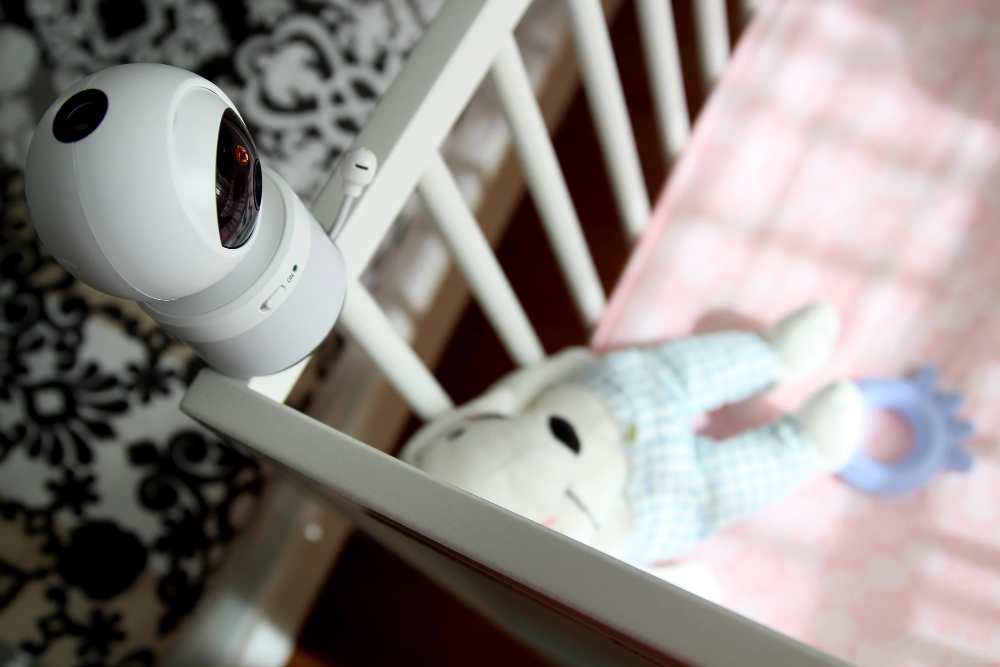
It is half past two in the morning. You hear a short noise, wake up fully, and for a few seconds you do not know whether you need to get up or whether the baby has simply shifted position. In that moment you are not thinking about screen size, resolution, or apps; you are thinking about solving one specific doubt with as little extra gear as possible.
That is why a useful baby monitor is not chosen from the spec sheet, but from the half-asleep situation you want it to solve: noticing in time, avoiding an unnecessary trip into the room, or not bouncing between two rooms.
This guide uses five specific models to ground those situations without turning the article into a ranking or assuming that the monitor with the most features is the right purchase.
The mistake usually happens before you compare models
The most common mistake when buying a baby monitor is to start with the device instead of the situation. People compare video against audio, a big screen against a small one, or extras against extras, when the useful question is different: what moment at home you want to solve without adding more anxiety than you already have.
You live in a small flat and just want to know in time
Here the baby monitor does not need to reassure you with video; it needs to alert you properly. If you sleep nearby, hear things quickly, and the real decision is whether to go in or not, an audio monitor still solves the problem better than many people think because it means less gear and keeps you from checking a screen out of habit.
The cot is farther away and you go in too often because you are unsure
In this situation, a camera can make sense: not because it has more features, but because it keeps you from opening the door just to check whether the baby is still asleep, only moving, or has dropped the pacifier. Here the image is not a spectacle; it is context that helps you avoid interrupting more than necessary.
The routine is split across two rooms or two floors
Only here does the need for a bigger solution really appear. If you move between two rooms, two floors, or genuinely expect to add a second camera, a two-room setup changes the day-to-day routine. If that situation does not exist, the jump usually adds system rather than usefulness.
Philips Avent SCD503/26 two-way audio baby monitor
- Verdict
- Stable, private audio without adding a screen or relying on Wi-Fi
- Best for
- Nearby bedrooms and families who would rather listen than look
- Check first
- Falls short if you need to check position or movement without going in
Motorola Baby MBP21 audio baby monitor
- Verdict
- The simplest way to see whether audio already solves the real need
- Best for
- Tighter budgets or occasional use in a simple routine
- Check first
- It is a basic solution with no visual backup
BOIFUN baby monitor with camera and two-way audio
- Verdict
- Gives you video and a dedicated screen without moving into a two-room solution
- Best for
- Anyone who wants to look before going in and not rely on a phone
- Check first
- Only pays off if you will genuinely check the camera often
GHB wireless baby monitor with camera
- Verdict
- A measured step from audio to camera in a single room
- Best for
- Families who want to see the baby without moving up to a bigger system
- Check first
- It offers less headroom and less ambition than other video options
Blemil BL9052 split-screen baby monitor
- Verdict
- The only option in this selection that genuinely changes space coverage
- Best for
- Two relevant rooms or a real plan for a second camera
- Check first
- With only one room, it is usually more system than you need
| Product | Verdict | Best for | Check first |
|---|---|---|---|
Philips Avent SCD503/26 two-way audio baby monitor DECT audio with no camera | Stable, private audio without adding a screen or relying on Wi-Fi | Nearby bedrooms and families who would rather listen than look | Falls short if you need to check position or movement without going in |
Motorola Baby MBP21 audio baby monitor Basic entry-level audio | The simplest way to see whether audio already solves the real need | Tighter budgets or occasional use in a simple routine | It is a basic solution with no visual backup |
BOIFUN baby monitor with camera and two-way audio Simple video without Wi-Fi | Gives you video and a dedicated screen without moving into a two-room solution | Anyone who wants to look before going in and not rely on a phone | Only pays off if you will genuinely check the camera often |
GHB wireless baby monitor with camera Compact video | A measured step from audio to camera in a single room | Families who want to see the baby without moving up to a bigger system | It offers less headroom and less ambition than other video options |
Blemil BL9052 split-screen baby monitor Split screen for two points | The only option in this selection that genuinely changes space coverage | Two relevant rooms or a real plan for a second camera | With only one room, it is usually more system than you need |
At home rather than on the spec sheet, Philips Avent and Motorola only make sense when the nighttime doubt is very simple: whether you need to get up or not. As soon as you need to check position, pacifier, or movement before going in, audio stops being enough, and that is where GHB and, above all, BOIFUN start to make more sense.
Blemil is not here to win on features, but to solve a different routine. If you are not switching between two rooms or two floors, it is overkill. If that situation does exist, it is the only one of the five that genuinely changes day-to-day use instead of just adding another camera to a need that was still simple.
Philips Avent SCD503/26, the clear case for staying with audio
Key takeaways
The Philips Avent SCD503/26 works well when the baby monitor only needs to answer one question: whether the baby has woken up and you need to go in. Its value lies in not forcing you to look at anything to make that decision.
It is a DECT audio monitor, with no camera, a private connection, and Smart ECO mode. That places it in a very specific spot: nearby rooms, a simple routine, and families who prefer less gear on the nightstand.
Fits if
- You sleep nearby and only need to hear when the baby wakes up
- You would rather avoid another screen on the nightstand
- You want a local system with no Wi-Fi or app
Watch out for
- It does not help if you make frequent visual checks
- It runs on batteries and does not include a charging function
If every noise makes you get up to check position or movement, you are probably already in video territory. But if your real doubt is simply hearing in time, this is a much cleaner purchase than many camera-based alternatives.

Motorola MBP21, simple audio when you want to test the minimum option
The Motorola MBP21 does not change the logic of the article, but it sharpens a useful point: not every simple audio monitor needs to be justified as the main purchase. Sometimes it is useful precisely because it lets you check whether your real routine fits into the most basic solution.
Current evidence places it as a digital DECT audio monitor, with a stated range of 300 metres and a high-sensitivity microphone. That makes it a clear entry reference: less ambition, less gear, and also less room to grow if you suspect you will end up needing video.
Fits if
- You want to test whether audio already solves your night routine
- You want a simple, straightforward entry option
If you already know you will want to look at the cot before going in, this step will fall short. But if you are still deciding between audio and video, its value lies precisely in not disguising that limit.
GHB, a compact video monitor for a single room
The GHB comes into play when audio is no longer enough, but you still do not need to turn the baby monitor into a bigger system. Its place is in that middle ground where you want to look before going in, even though the routine still happens in a single room.
The factual base places it as a video monitor with a 3.2-inch screen, night vision, VOX, two-way audio, and a 2.4 GHz link. In real use, that means a compact camera for clearing up specific doubts, not a solution built for two spaces or a more complex setup.
Fits if
- You need video, but only for one cot and a simple routine
- You prefer a more compact video monitor than a larger system
Watch out for
- There is no solid basis for treating it as a dual-camera or two-room solution
It makes sense as a basic camera when the visual check genuinely changes your nights. If what you want is already more coverage, more room to grow, or two points at once, it is better not to ask it to play a role that does not fit.
BOIFUN VB616, simple video when you really do need to look
Key takeaways
The BOIFUN VB616 makes sense when the camera saves you pointless trips into the bedroom. It does not change the logic of the purchase; it simply resolves the visual doubt more effectively: whether the baby is still asleep, only moving, or actually needs you to go in.
The factual base places it as a 4-inch, 720p video monitor, without Wi-Fi, with night vision and two-way audio. What matters here is not the number of features, but that it represents the simple video step for a single room well.
Fits if
- You want to look before going into the room
- Your usual doubt is position, pacifier, or movement
- You prefer a dedicated screen and a local system
Watch out for
- There is no solid basis for treating it as a two-camera solution
- Its extras matter less than deciding whether you truly need video
It pays off as a step up from audio when the image repeatedly saves you trips into the room. If you only check the screen because of occasional insecurity, it probably does not justify paying for that change in category.
Blemil BL9052, useful only when there are two points to watch
Key takeaways
The Blemil BL9052 is not better just because it brings more. Its value appears when the home no longer needs only audio or video, but a more comfortable way to cover two rooms, two floors, or two sleep spots with the same parent unit.
It is the only model in this selection with clear evidence of split-screen viewing and the option to connect up to two cameras. That difference really does change the day-to-day setup: it keeps you from thinking about a second device or switching between a single view.
That said: the base pack includes only one camera, and split-screen does not mean listening to two rooms at the same time. That is why it makes sense to read it as a solution for a specific case, not as the natural step everyone should aspire to.
Fits if
- There are two relevant rooms or two floors
- You expect to add a second camera soon
- You want to see two points without switching between cameras
Watch out for
- The base pack includes only one camera
- Split-screen does not mean listening to two rooms at the same time
If today you are only watching one cot in a small flat, you are buying more system than you will use. If your real problem is two spaces, it is the only option in this selection that genuinely changes how you use it, not just the feature list.
The uncomfortable but useful part
Many families buy a camera not because their home needs one, but because they need a visual check to feel calm. Saying it that plainly sounds uncomfortable, but it helps a lot when buying better.
- If your night is solved by hearing in time, you may need less system than you imagined.
- If your night improves by looking before going in, then the camera answers a real need rather than an impulse.
- If the problem is watching two spaces, then it does make sense to pay for a bigger solution.
The point is not to judge that worry, but not to confuse it with a technical need. Sometimes you are not buying a baby monitor to watch the baby better, but to lower your own tension. And you do not always need to pay for a camera to achieve that.

Written by
Laura GómezBaby product editor
Specialized in comparisons and buying guides for families.
You may also like
More helpful reads for common questions at this stage.

Mar 10, 2026
Tight baby budget: what to buy first, what to ask for, and what can wait
When the baby budget is tight, not everything needs to be bought new: this is what to close now, what to ask for or inherit, and what can wait without drama.

Apr 14, 2026
First 7 Days at Home with Your Baby: What to Prepare Before Leaving the Hospital
Have ready what you really use after coming home from the hospital: sleep, diaper changes, feeds, clothes, and essentials without filling the house with extras.

Mar 25, 2026
Hospital bag for labor: what to bring, what to ask, and what to leave out
Pack your hospital bag without overloading it, separating essentials from what depends on the hospital and what only adds comfort.

Apr 01, 2026
Duplicate gifts on the baby registry: a simple system to avoid them
What to do so you do not end up receiving the same gift twice: a simple way to organize the registry, clarify statuses, and handle purchases made outside the list without chasing the whole family.