















Guide to choosing a first baby bottle: what matters from birth
Choosing the right bottle for a newborn can be more complicated than it looks, especially if you plan to combine it with breastfeeding. These are the criteria that really matter and six compared options to help you decide with more confidence.
newborn feeding
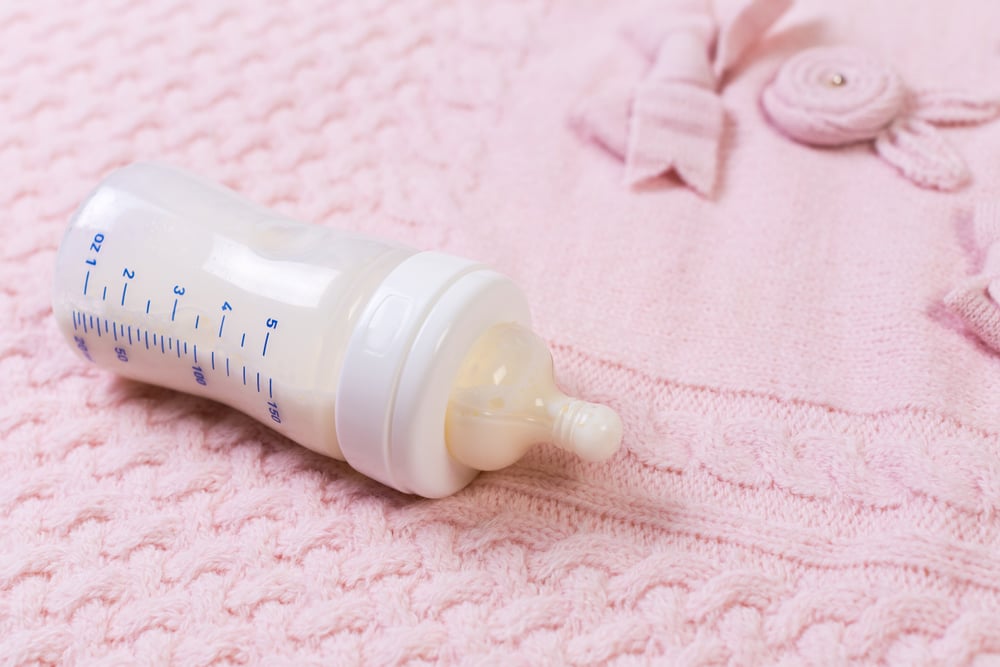
Choosing a first baby bottle seems like a small decision until you reach the pharmacy aisle: plastic or glass, physiological or conventional nipples, different anti-colic systems, and brands presenting themselves as the most recommended by pediatricians.
This guide focuses on newborns aged 0 to 3 months, with special attention to mixed feeding. It does not rank products: it explains the criteria that matter at this stage and compares six useful options to help you decide based on different needs.
What to look at before choosing
Modern plastics - PP, Tritan or PPSU - are lightweight, durable and BPA-free. Glass does not release microplastics, keeps temperature longer, and sterilizes more consistently. At 0-3 months, the person giving the feed is managing the weight: if the caregiver is comfortable with it, it is a valid option from day one.
The nipple and flow rate are the most important factors in the first weeks. A fast flow interferes with breastfeeding and leads to more air intake; always use the slowest option the brand offers: flow 0, flow 1 or the 'newborn' size. With mixed feeding, physiological or wide-neck nipples make it easier for the baby to use the same sucking pattern as at the breast.
All models include some kind of anti-colic: internal valves, spirals or vent systems. None guarantees that colic will disappear - its causes are multifactorial - but they do reduce swallowed air. If there is diagnosed colic or reflux, it becomes a central criterion.
At this stage, 130 to 165 ml bottles are the best fit. Feeds are small and frequent; starting with a 270 ml bottle offers no practical advantage.
Suavinex ZERO Anti-Colic Mixed Feeding 270ml
- Verdict
- A good nipple if you plan to combine breast and bottle
- Best for
- Mixed feeding from the start
- Check first
- Less compelling if you do not need such a specific nipple
MAM Easy Start Anti-Colic Baby Bottle 0+ Months 160ml
- Verdict
- A very simple sterilizing routine from the start
- Best for
- Anyone who wants fewer kitchen gadgets
- Check first
- Try the nipple before buying several units
Dr. Brown's Options+ Wide Neck Newborn 150ml
- Verdict
- The most serious anti-colic option if air is a real problem
- Best for
- Colic or reflux with difficult feeds
- Check first
- More parts and more washing than the rest
Philips Avent Natural Response Baby Bottle with AirFree System 125ml
- Verdict
- A good middle ground between a well-known brand and a clear system
- Best for
- Anyone who wants simplicity without dropping to a basic system
- Check first
- You need to learn the AirFree angle properly
Lansinoh mOmma Glass Baby Bottle 160ml NaturalWave Nipple
- Verdict
- The most coherent glass option for starting out
- Best for
- Families who prefer glass from day one
- Check first
- Heavier during long or nighttime feeds
Mepal Mio Little Dutch Anti-Colic Baby Bottle 165ml
- Verdict
- Simple to use with no extra parts to wash
- Best for
- Anyone who prioritizes simplicity over ecosystem
- Check first
- Less track record and fewer accessories than more established brands
| Product | Verdict | Best for | Check first |
|---|---|---|---|
Suavinex ZERO Anti-Colic Mixed Feeding 270ml Tritan plastic, physiological nipple | A good nipple if you plan to combine breast and bottle | Mixed feeding from the start | Less compelling if you do not need such a specific nipple |
MAM Easy Start Anti-Colic Baby Bottle 0+ Months 160ml Plastic, self-sterilizing | A very simple sterilizing routine from the start | Anyone who wants fewer kitchen gadgets | Try the nipple before buying several units |
Dr. Brown's Options+ Wide Neck Newborn 150ml Plastic, internal valve | The most serious anti-colic option if air is a real problem | Colic or reflux with difficult feeds | More parts and more washing than the rest |
Philips Avent Natural Response Baby Bottle with AirFree System 125ml PP plastic, AirFree system | A good middle ground between a well-known brand and a clear system | Anyone who wants simplicity without dropping to a basic system | You need to learn the AirFree angle properly |
Lansinoh mOmma Glass Baby Bottle 160ml NaturalWave Nipple Glass, NaturalWave nipple | The most coherent glass option for starting out | Families who prefer glass from day one | Heavier during long or nighttime feeds |
Mepal Mio Little Dutch Anti-Colic Baby Bottle 165ml Plastic, anti-colic spiral | Simple to use with no extra parts to wash | Anyone who prioritizes simplicity over ecosystem | Less track record and fewer accessories than more established brands |
If you want to decide quickly
If the priority is combining breast and bottle without too much trial and error, start with a nipple clearly designed for mixed feeding such as Suavinex ZERO or MAM Easy Start. If there is already digestive discomfort, gas or reflux, it makes more sense to look at Dr. Brown's before randomly trying simpler options.
Philips Avent is a good fit when you want a well-known brand and an anti-colic system that is easy to work into your routine. Lansinoh makes more sense if you prefer glass from day one. Mepal is only worth considering if you care a lot about simplicity and design and do not need as established an ecosystem as the better-known brands.
Suavinex ZERO Anti-Colic Mixed Feeding
Key takeaways
Suavinex's ZERO range is designed for mixed feeding. Its anatomical nipple aims to mimic breastfeeding, with slow flow for newborns and an anti-colic system integrated into the base. The body is made of Tritan, a BPA-free plastic that stands up well to repeated sterilization.
Fits if
- Mixed feeding is the plan from the start
- You want to avoid testing one nipple after another
Watch out for
- If you do not need such a specific nipple, there are broader options
It is the best fit when mixed feeding is not a fallback plan but the starting point. If you want to begin with a clear hypothesis, it is one of the easiest purchases to justify.

MAM Easy Start Anti-Colic
Key takeaways
MAM Easy Start's biggest strength is that it can be sterilized in the bottle itself in 3 minutes. If you do not have a sterilizer or want fewer kitchen extras, it makes the routine much simpler. The flat silicone nipple and the base valve make it a practical option to start with.
Fits if
- You want a simple routine from day one
- You do not have a sterilizer and prefer not to add one
Watch out for
- It is worth trying the flat nipple before buying several units
It works especially well as a starter bottle when you want fewer extra items and more everyday convenience. If the baby takes to that nipple, it is hard to find a more practical everyday option.
Dr. Brown's Options+ Wide Neck
Key takeaways
Dr. Brown's comes up a lot when there is colic or reflux. Its internal vent system moves air away from the milk, so the proposition here is very clear: less air in exchange for more parts. The wide neck helps with filling and cleaning, but it is still the bulkiest model in the group.
Fits if
- There is gas or reflux and air intake matters
- You accept more washing in exchange for a more complete system
Watch out for
- It has several parts, and you feel that when washing up
- The internal vent tube is easy to misplace
It is worth it when there is a real digestive issue. If there is not, that much complexity is usually unnecessary compared with simpler options.
Philips Avent Natural Response with AirFree system
Key takeaways
Philips Avent combines the Natural Response nipple with the AirFree system. The idea is that milk only flows with active sucking and that the nipple stays full of milk rather than air. It works well as a middle-ground option: less complex than Dr. Brown's, but more guided than a very basic bottle.
Fits if
- You want a benchmark brand with a system that is easy to understand
- You want a middle ground between simplicity and air control
Watch out for
- AirFree requires learning the correct angle
- If you do not get that technique right, it loses some of its point compared with other options
It makes sense if you want a well-known brand and a system any caregiver can understand quickly. Success here depends a lot on picking up the technique early.
Lansinoh mOmma Glass 160 ml
Key takeaways
The group's glass option. Borosilicate glass does not release microplastics, holds temperature better and tolerates sterilization very well. The NaturalWave nipple aims for a sucking pattern similar to breastfeeding, so it is especially well suited if you want to avoid plastic without giving up a mixed-feeding-friendly option.
Fits if
- You prefer glass from day one
- The material matters more to you than the extra weight
Watch out for
- It is heavier during long or nighttime feeds
- If it falls, glass still carries more risk
It is the most coherent option if the decision to avoid plastic has already been made. With newborns, the adult handles the weight, so it usually matters less than it seems.
Mepal Mio Little Dutch 165 ml
Key takeaways
Mepal Mio goes for a simple formula: Tritan body, silicone nipple and anti-colic spiral with no extra parts. What stands out most is how easy it is to use; the design catches the eye, but what matters here is that it is a bottle you can assemble, wash and use again without a learning curve.
Fits if
- You want something easy to use and clean
- Design matters to you, but you do not want an unusual system
Watch out for
- It has less track record than better-established brands
- As a main purchase, it gives less reassurance than other options
It may suit you if you prioritize simplicity and like this format, but it would not be the strongest recommendation for starting out without references. Its advantage is how easy it is to use, not a clear edge over the others.
Frequently asked questions
How many bottles should you buy at the start?
With 2 or 3 bottles it is enough for the first few weeks. Feeds are frequent but small, and having one in the dishwasher or sterilizer is not a problem if there are two on hand. The most common mistake is buying too many before trying them: it is better to confirm first that the nipple works and then expand your stock.
When should you move up a flow rate?
When the baby's behavior points to it, not when the calendar suggests it. Signs that the flow is too slow are usually clear: feeds take too long, the baby gets frustrated halfway through, sucks with a lot of effort or tires before finishing. Age is only a rough guide.
Can you use a nipple from one brand with the bottle body of another?
In general, no. The closure systems, thread diameter and fit shape are not standardized across brands. Mixing parts can cause leaks or make the anti-colic system work poorly. If you want to change nipples, the safest option is to change the bottle body as well or explicitly verify that the combination is compatible.
How to frame the decision
If all you want is a sensible first purchase, break the decision down into clear profiles. For mixed feeding without digestive discomfort, Suavinex ZERO and MAM Easy Start are two clear starting points: the first fine-tunes the breast-to-bottle transition more, and the second does a better job of simplifying the daily routine.
If there is colic, marked gas or reflux, Dr. Brown's Options+ is the option that makes the most sense when the goal is to reduce swallowed air, even if that means accepting more parts and less convenient cleaning.
If you want glass from day one, Lansinoh mOmma is the group's most coherent alternative. Philips Avent AirFree sits in a useful middle ground for anyone looking for a well-known brand with a system that is easy to understand. Mepal only makes sense if you value ease of use and design well above having the most solid ecosystem.
The right decision at this stage is not the one that looks most complete on the box, but the one that best matches your real routine and how the baby responds in those first feeds.

Written by
Laura GómezBaby product editor
Specialized in comparisons and buying guides for families.
You may also like
More helpful reads for common questions at this stage.

Jun 23, 2026
Newborn quirks that surprise first-time parents
Newborn babies are far more amazing than they look. A moulded head, irregular sleep, reflexes, hiccups, skin with vernix... so many things stand out at first, but most of them have a simple explanation. Here are some of the things many parents discover in the early days.

Apr 14, 2026
First 7 Days at Home with Your Baby: What to Prepare Before Leaving the Hospital
Have ready what you really use after coming home from the hospital: sleep, diaper changes, feeds, clothes, and essentials without filling the house with extras.

Jul 07, 2026
Sleeping like a baby doesn't mean sleeping through the night
Normal wakings, safe sleep, and false expectations: what to know before assuming something is wrong.

Jun 01, 2026
Multi-store baby registry: what to check before choosing an app
A multi-store baby registry is more than collecting links from different shops. Here are the criteria to review before choosing an app so family and friends can understand the list without extra back-and-forth.